Pregnancy & high-risk care
Antenatal check-ups, scans and growth monitoring, gestational diabetes and hypertension in pregnancy, twin and previous-caesarean pregnancies, birth planning. Pregnancy care, trimester by trimester.
Obstetrician, Gynecologist & Laparoscopic Surgeon — fertility care for women in ECR.
MBBS · MS (OBG) · DNB (OBG) · Fellowship in Minimal Access Surgery. Nine years of practice in high-risk pregnancy, reproductive medicine and keyhole gynec surgery.
What she treats
Antenatal check-ups, scans and growth monitoring, gestational diabetes and hypertension in pregnancy, twin and previous-caesarean pregnancies, birth planning. Pregnancy care, trimester by trimester.
Encouraging normal delivery wherever it is safe, with experience in complicated vaginal deliveries and planned or emergency caesarean sections.
Infertility evaluation for couples, ovulation induction, tubal assessment by hystero-laparoscopy, IVF and recurrent pregnancy loss. How fertility care works, step by step.
Fellowship-trained in minimal access surgery: hysterectomy, ovarian cystectomy, fibroid and endometriosis surgery — smaller scars, faster recovery. What keyhole surgery involves.
PCOD, heavy or irregular bleeding, painful periods, adolescent gynecology, hormonal and lifestyle management. More about PCOS and PCOD.
Confidential, non-judgmental counselling on contraception, MTP within legal limits, and post-procedure follow-up.
If you are not sure whether your concern fits, call — she will tell you honestly whether you need to be seen.
Procedures performed
About
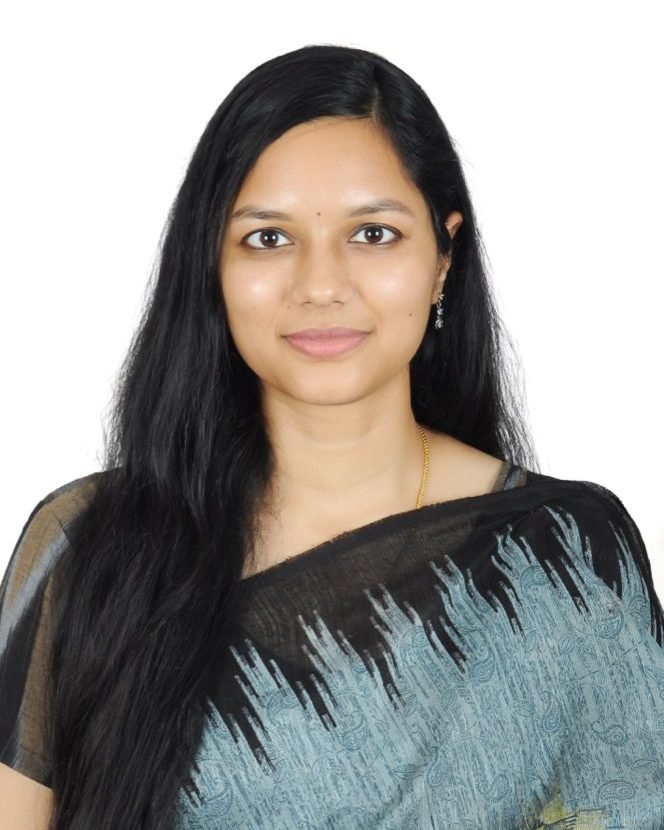
Dr. Thirumagal is an obstetrician, gynecologist, laparoscopic surgeon and infertility specialist with nine years of experience. She is from Chennai and consults fluently in Tamil, Hindi and English, offering friendly, compassionate care through to complete recovery.
She works to make advanced medical care affordable, and treats every patient with dignity — respecting a woman's right to make informed decisions about her own health, with care that is honest, evidence-based and free of judgment. Here is what happens at your first visit.
“Every woman deserves to make decisions about her own body with accurate information and without shame.” Dr. Thirumagal P
MBBS
Karpaga Vinayaga Institute of Medical Sciences
MS — Obstetrics & Gynecology
Chengalpattu Medical College · Gold medallist
DNB — Obstetrics & Gynecology
Narayana Hrudayalaya, Bangalore
Fellowship in Minimal Access Surgery
World Laparoscopy Hospital, Gurgaon
Gold medal holder, Chengalpattu Medical College
Member, Gender Equality Committee
Previously at Ooty Medical College, Kamakshi Hospital and LIVF Fertility
Published on hyperemesis gravidarum in pregnancy and magnesium sulphate neuroprotection
TN Medical Council Reg. No. 131866
Your first visit
Many women put off seeing a gynaecologist because they are not sure what is going to happen. So here is the whole thing, plainly.
Your visit starts with a conversation, not an examination. Dr. Thirumagal will ask about your periods, what is troubling you, any past pregnancies or surgeries, and the medicines you take. Then she will tell you what she thinks is going on, and what would help to confirm it.
An internal examination is not always needed. If it is, she will explain why before anything is done, and you can say no, or ask to come back another day. A female attendant stays in the room throughout, and you are welcome to bring your own. A scan may be done the same day if it will save you a second trip.
You should leave knowing three things: what the problem most likely is, what the next step is, and what that step will involve. If something was not clear, ask again. That is what the time is for.
Do not wait for an appointment if any of these apply. Call 044 4012 4055, or go straight to the hospital's casualty department.
Visit
Monday to Sunday, including public holidays. Appointments are advised; walk-ins are accepted during consulting hours.
Unittas Hospital
East Coast Road (ECR), Chennai, Tamil Nadu
In an obstetric emergency — bleeding, severe pain, reduced fetal movements or leaking fluid — call the hospital immediately or go to casualty.
Areas we serve
Unittas Hospital sits on East Coast Road, which puts it within a short drive of most of the coastal neighbourhoods of south Chennai. Patients come from both sides — the ECR stretch itself, and the OMR corridor, using the link roads that join the two.
Thiruvanmiyur, Palavakkam, Kottivakkam, Neelankarai, Vettuvankeni, Injambakkam, Akkarai, Panaiyur, Uthandi, Muttukadu and Kovalam.
Perungudi, Thoraipakkam, Sholinganallur, Karapakkam, Navalur, Siruseri and Kelambakkam.
Adyar, Besant Nagar and the Thiruvanmiyur signal side.
Because the clinic runs twice a day, seven days a week, you can usually find a time that does not cost you a day's leave. Families driving down from the OMR tech parks tend to prefer the 6 PM to 9 PM session. Mornings are generally calmer, which helps if you are bringing a child along or coming for a long first consultation.
Coming for the first time? Call 044 4012 4055 before you set out. The desk will tell you the easiest turn-off for your side of the road, and whether the morning or the evening session is running to time that day. Full consultation timings are above.
Pregnancy care
Every pregnancy is different. A plan that suits a first-time mother at 24 will not suit someone at 38 with a previous caesarean. What follows is the usual shape of antenatal care — yours will be adjusted to you, and Dr. Thirumagal will tell you where and why it differs.
Come as soon as your test is positive. The first visit confirms that the pregnancy is growing in the right place and fixes your due date with a scan. Blood tests check your group and Rh type, haemoglobin, sugar, thyroid and a few routine infection screens. Folic acid is started, and you will get straightforward advice on nausea, food, travel, and which of your existing medicines are safe to continue. A further scan between 11 and 13 weeks checks early development.
This is also the stage where morning sickness can become severe enough to need treatment. If you cannot keep fluids down, that is a reason to come in rather than wait it out.
Usually the most comfortable stretch. Visits settle to about once a month. A detailed anomaly scan around 18 to 22 weeks looks carefully at the baby's organs, spine, heart and growth. A sugar test between 24 and 28 weeks checks for diabetes in pregnancy, which is common and very manageable when it is picked up. Iron and calcium are generally started, and tetanus protection is given. Most women feel the first movements somewhere in this trimester.
Visits become more frequent — every two weeks, then weekly towards the end. Growth scans check the baby's size and position and the fluid around it. Your blood pressure, weight and haemoglobin are watched closely, because this is when problems like pre-eclampsia tend to appear. You will be shown how to count the baby's movements at home.
This is also when you and Dr. Thirumagal make the delivery plan: what you are aiming for, what would change that plan, when to come in, and what to keep packed.
If your pregnancy is high-risk — high blood pressure, diabetes, thyroid problems, twins, a previous caesarean, a history of miscarriage or preterm birth, or a baby whose growth needs closer watching — you will be seen and scanned more often. High-risk pregnancy is one of Dr. Thirumagal's main areas of work.
About scans and the law. Scans in pregnancy are done to check the baby's growth, position, heartbeat and development, and to pick up problems that may need treatment. Indian law — the PCPNDT Act — makes it a criminal offence to determine or disclose the sex of an unborn baby. That is never done here, and it will not be done for anyone. Please do not ask.
PCOS & PCOD
PCOS — polycystic ovary syndrome, often called PCOD — is one of the most common hormonal conditions in women of reproductive age. It is not something you caused, and it is not a disease you have to live around. It is a condition that is very manageable once it has been properly identified.
You may have some of these and none of the others. Plenty of women with PCOS have cycles that look perfectly regular.
There is no single test for PCOS. Dr. Thirumagal will take a proper history of your cycles and symptoms, examine you, and usually ask for blood tests — hormones, thyroid, sugar and insulin — along with a pelvic ultrasound to look at the ovaries.
The diagnosis comes from the whole pattern, not from the scan alone. This matters: a scan report that mentions “polycystic ovaries” does not by itself mean you have PCOS, and a lot of unnecessary worry comes from that one line being read out of context.
What is offered depends on what is actually troubling you, and on whether you are trying to conceive right now.
PCOS is a long-term condition. It is controlled rather than cured, and for most women it settles into something quite ordinary to live with. It does raise the risk of diabetes in later life, which is a good reason to keep an eye on it even during years when you are not planning a pregnancy.
Fertility care
Not being able to conceive is exhausting, and the advice arriving from everyone around you is usually contradictory. The medical process is actually quite orderly. Knowing the sequence in advance takes some of the fear out of it.
If you are under 35 and have been trying for a year without success, come. If you are 35 or older, come at six months — time matters more at that stage. Come sooner, without waiting out the clock, if your periods are very irregular or absent, if you have had two or more miscarriages, if you have had pelvic surgery, endometriosis or a pelvic infection, or if your husband already knows of a problem on his side. See also when to see a fertility specialist.
Both partners are assessed. In roughly a third of couples the cause lies with the man, in a third with the woman, and in the rest it is shared or never fully explained. Testing only one of you wastes months. For you, this usually means blood tests for hormones and ovarian reserve, a scan, and a check that the fallopian tubes are open. For your husband, it starts with a semen analysis, which is simple and quick. Please come together for this visit if you can.
Some causes are straightforward to correct: an untreated thyroid problem, a vitamin deficiency, PCOS that responds to weight change, or a fibroid or cyst that is best removed. Where ovulation is the difficulty, tablets or injections may be used to help the ovaries release an egg, with scans to time it properly. Many couples never need to go past this step.
If the tubes are blocked, if there is a significant problem on the male side, or if simpler treatment has not worked over a reasonable stretch of time, IVF may be the sensible next step. Dr. Thirumagal will tell you honestly what your situation looks like and what the process will ask of you — in time, in injections, and in money — before you commit to anything. No one can promise you a pregnancy, and you should be careful of anyone who does.
You can stop at any step, take a break for a few months, or go elsewhere for a second opinion. None of that will change how you are treated here.
Keyhole surgery
Laparoscopy — “keyhole” surgery — means operating through a few small cuts using a camera and fine instruments, instead of through one large one. Dr. Thirumagal holds a Fellowship in Minimal Access Surgery (FMAS) from World Laparoscopy Hospital, Gurgaon.
In cases that suit it, keyhole surgery usually means smaller scars, less pain afterwards, a shorter stay in hospital, and a faster return to work and to running a household, compared with open surgery. Blood loss is generally lower and wound infections are less common.
“Usually” is doing real work in that sentence. These are the typical patterns, not a guarantee about your operation.
Not every case suits laparoscopy. Very large fibroids, heavy scarring from earlier surgery, certain cancers, and some emergencies are safer handled by the open route or through the vaginal route. Occasionally a keyhole operation has to be converted to an open one partway through. That is a safety judgement made in your interest during the operation — not a failure of the technique, and not a complication in itself.
Every operation carries risk, whichever route is chosen. Before you sign a consent form, Dr. Thirumagal will go through what she plans to do, what the alternatives are — including waiting and doing nothing for now — and what the specific risks are in your case. You are entitled to that conversation, and to time to think it over.
Dr. Thirumagal P consults at Unittas Hospital, a maternity centre on East Coast Road (ECR) in Chennai. It is an easy drive from Thiruvanmiyur, Palavakkam, Neelankarai, Injambakkam, Akkarai, Uthandi and Kovalam, and from the OMR side through the link roads at Sholinganallur and Kelambakkam. Call 044 4012 4055 for directions.
Most of her patients come from the ECR stretch — Thiruvanmiyur, Palavakkam, Neelankarai, Vettuvankeni, Injambakkam, Akkarai, Uthandi, Panaiyur, Muttukadu and Kovalam. Families from the OMR corridor, including Perungudi, Thoraipakkam, Sholinganallur, Karapakkam, Navalur, Siruseri and Kelambakkam, reach the hospital by the connecting link roads. Adyar and Besant Nagar are a short drive north.
The clinic is open all seven days, including public holidays. Morning hours are 10:00 AM to 2:00 PM and evening hours are 6:00 PM to 9:00 PM. Sunday and holiday consultations run at the same times, which helps if you cannot take leave from work. Please call 044 4012 4055 before you start out.
Call the hospital on 044 4012 4055 during consultation hours and the desk will give you a slot. Booking ahead is advised because clinic hours can shift when Dr. Thirumagal is attending a delivery or a surgery. Walk-ins are accepted, and a quick call before you leave home will tell you the current waiting time.
Yes. Walk-in patients are seen during both the morning and the evening session, though booked patients are called first, so the wait may be longer. If your problem is urgent — heavy bleeding, severe pain, or a worry about your pregnancy — say so at the front desk when you arrive, so you can be seen sooner.
She consults in Tamil (தமிழ்), English and Hindi, so you can explain the problem in whichever language you are most comfortable with. Being able to describe symptoms in your own words genuinely matters — it changes what gets examined and tested. If you would rather bring a relative along to help you explain, that is welcome.
Bring any earlier scan reports, prescriptions, blood test results and discharge summaries, even old ones. Note the first day of your last period, and roughly how long your cycles usually run. If you take regular medicines for thyroid, diabetes, blood pressure or anything else, bring the strips or a written list.
Yes. A female attendant can stay with you for the whole examination, and a member of the hospital staff is present as well. If you are coming alone and would like someone in the room, ask at the desk. You may also ask Dr. Thirumagal to explain any step before it is done.
For most pelvic and pregnancy scans you do not need to fast, though you may be asked to come with a full bladder. Some blood tests, such as fasting sugar or a lipid profile, do need eight to ten hours without food. When your test is booked, ask the desk which preparation applies to you.
For many women it is, but it depends on why the first caesarean was done, the type of scar, the gap between pregnancies and how this pregnancy is going. It needs to happen in a hospital equipped to move to an emergency caesarean quickly. Dr. Thirumagal will go through your records and discuss what is reasonable in your case.
PCOS, also called PCOD, is a common hormonal condition. Periods become irregular or stop, and there may be weight gain, acne or extra facial hair. It is identified from your history, blood tests and a scan. There is no one-time cure, but it is very manageable — with weight and lifestyle changes, and medicines chosen for your situation.
If you are under 35 and have been trying to conceive for a year without success, it is time for a check. If you are 35 or older, come after six months. Come sooner if your periods are very irregular or absent, if you have had two or more miscarriages, or if you have had pelvic surgery or infection.
Laparoscopy is a well-established way of operating through small cuts using a camera. In suitable cases it usually means less pain, a shorter hospital stay and a quicker return to normal activity than open surgery. Like any operation it carries risks, and not every problem suits it. Dr. Thirumagal will explain the risks for your case before you decide.
Yes — high-risk pregnancy is one of her main areas of work, alongside fertility and keyhole surgery. This covers pregnancies with high blood pressure, diabetes in pregnancy, thyroid problems, twins, a previous caesarean, a history of miscarriage or preterm birth, and pregnancies where the baby's growth needs closer watching.
Yes, within the time limits set by India's MTP Act. You will be given accurate information about your options, the methods available at your stage of pregnancy, and the risks — and the decision remains yours. Your visit is confidential; the law requires that. You will not be judged or lectured, whatever you decide.
No. Indian law — the PCPNDT Act — makes it a criminal offence to determine or reveal the sex of an unborn baby, and no scan here will do it. Pregnancy scans are done to check the baby's growth, position, heartbeat and development, and to look for problems that may need treatment.
Book a visit as soon as the test is positive, ideally within the first six to eight weeks. The first visit confirms the pregnancy is in the right place, works out your due date, checks your blood group, haemoglobin, sugar and thyroid, and starts folic acid. Come the same day if you have bleeding or one-sided pain.
Yes. What you tell Dr. Thirumagal stays between you and her, and your records are not shared with family members or anyone else without your consent. This applies whatever your age or marital status, and whatever you have come in for. Ask freely — an accurate history is what makes the treatment right.